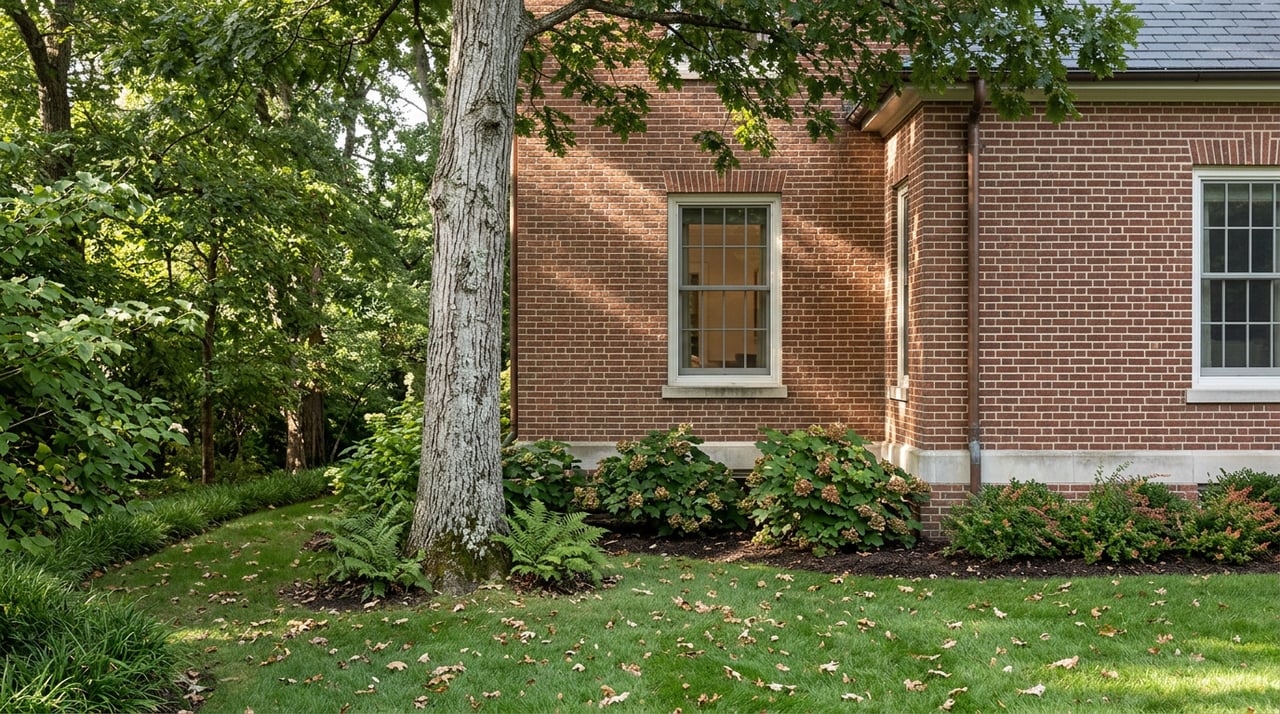
If you saw the headline this month, you probably pictured the usual sequence. City buys land, city opens park, neighbors show up with strollers and leashes by the following weekend. That is not what is happening on Randall Mill Road.
The City of Atlanta closed on the 30-acre forest that once belonged to photographer and arts patron Lucinda Bunnen on June 30, and this month city officials publicly laid out, for the first time, what residents should actually expect next, according to Rough Draft Atlanta. The next visible change on that property will not be a trailhead sign or a bench. It will be a fence. Public access is expected to follow, but not this year, and the reason has less to do with construction schedules than with where the money came from.
The Land That Almost Became Twelve Houses
Bunnen assembled the property over roughly five decades, buying up parcels of woodland around the mid-century home she and her husband commissioned from architect Cecil Alexander in the late 1950s. By the time she died in 2022 at 92, the land had grown into a contiguous forest larger than downtown's Centennial Olympic Park and Woodruff Park combined, tucked inside one of Buckhead's most active teardown corridors.
That context matters more than the acreage number itself. Sally Riker, president of the neighborhood association, was describing the familiar pressure on wooded parcels in this teardown corridor. Here, however, the buyer was the city rather than a builder. Robb Bunnen, Lucinda's son, put the family's relief in blunter terms afterward, saying they were thrilled not to have to watch a dozen new houses go up where the forest had stood.
The Conservation Fund, a national nonprofit that buys and holds land for future public ownership, purchased the estate for $13.5 million in October 2024 and carried it for nearly two years while the city assembled its share of the money. The final closing brought the total to $15 million, split evenly between Atlanta's Tree Trust Fund and private donations.
The Fence Comes Before the Trail
Here is the detail that separates this project from a typical park opening. Because half the purchase money came from the Tree Trust Fund, the land is bound by the rules that govern that fund, and one of those rules is that you cannot remove trees on property bought with it. Atlanta City Council member Mary Norwood, who represents the district, has said the funding source and the conservation outcome are effectively the same thing. There is no separate vote needed to keep this forest intact. The money that saved it also locks it in place.
That is why the first physical change on the property will be a perimeter fence rather than a parking area or a playground. Norwood has described the fencing as a matter of marking a clear way in and out, not building a barrier that feels unwelcoming. But a secured perimeter has to go up before the city can responsibly open trails to the public, and that sequencing is why residents driving past Randall Mill Road this fall should expect fence posts before footpaths.
When the trails do open, the model the city is following is not Chastain Park or Bobby Jones. It is Cascade Springs Nature Preserve on Atlanta's southwest side, a wooded tract the city has managed for decades with walking trails, natural springs, and deliberately minimal programming. No ball fields. No structured events calendar. The appeal of that preserve is what it does not have, and Buckhead's newest greenspace is being built on the same restraint.
Rough Draft Atlanta reported neighborhood association president Sally Riker's observation that homes in the area sell, trees are cut down, and larger homes are built.
What Actually Changes, and When
For residents near Randall Mill Road, the practical timeline looks like this:
- June 30, 2026 — The sale closes. The land legally becomes city property for the first time.
- Mid-August 2026 — City officials publicly detail what happens next: a fence, then trails, then an eventual artist residency.
- Coming months — A perimeter fence goes up around the 30 acres, marking entrances rather than sealing the land off.
- As early as 2027 — Public trails open, according to Norwood, following the Cascade Springs template of quiet, unprogrammed access.
- No fixed date yet — Bunnen's mid-century home is expected to eventually house an artist-in-residence program, with exhibitions inside the house she and her husband built.
That is a longer runway than most headlines implied. The land has been secured. The forest will stay a forest by law rather than by promise. But anyone expecting to walk this property on a Saturday morning anytime soon is working from the wrong mental model.
The Trail Was Already There
One detail explains why the city feels comfortable moving toward public trails at all. Bunnen did not leave a raw, unmarked forest. She built a hilly, two-mile perimeter trail on the property herself, according to reporting from Axios, after she was arrested for walking her dog off leash at the Chattahoochee River National Recreation Area. She hiked her own trail daily, sometimes twice a day, well into her nineties. Getting invited to walk the property with her was, by her family's account, something of a rite of passage among friends.
Little Nancy Creek runs through the land, and the existing trail network gives the city a head start that most new park acquisitions do not have. The bones are already there. What is missing is the fence, the signage, and the legal sign-off to let the public in.
Why This Parcel and Not Another
Buckhead is one of the fastest-developing parts of Atlanta, and Axios has noted the neighborhood has surprisingly few accessible parks relative to that growth. Stacy Funderburke of The Conservation Fund, who worked the deal from the nonprofit side, has said there is nothing comparable within 20 miles: a forest this size, with a creek running through it and decades of undisturbed canopy, sitting inside one of the most intensely developed parts of the city.
That rarity is also why the sale carries some local real estate memory. Bonneau Ansley of Ansley Real Estate and Christie's International, the brokerage The Stowe Group is affiliated with, represented the Bunnen family when the property first went to The Conservation Fund in 2024. He called the deal historic at the time, noting there had not been anything like it available in decades and there was little chance of that much contiguous land coming to market again in that part of Buckhead.
A Different Kind of Neighborhood Landmark
Most new greenspace announcements come with a ribbon cutting and an immediate invitation to enjoy it. This one comes with a longer, quieter timeline: a fence first, then trails sometime next year, then eventually an artist's house reopened to the public in a form its original owner would likely have recognized. For a neighborhood used to watching wooded lots turn into larger homes within a matter of months, that patience is itself the story. Thirty acres on Randall Mill Road are staying wooded because the money that bought them came with strings attached, and for once, those strings are the whole point.
If you live near this corner of Buckhead and want to talk through what a project like this tends to mean for a neighborhood over the next few years, or if you're simply curious what your own home might be worth in a market that just got a little greener, The Stowe Group is always glad to compare notes. Request a Confidential Valuation whenever the timing is right for you.