If you have ever driven through Tuxedo Park and wondered why the homes feel so distinct yet so connected, the answer is not just architecture. It is the way each estate sits on the land. In this part of Buckhead, the house, the long approach, the deep setback, and the wooded lot all work together. This guide will help you read the neighborhood’s grand estates with a sharper eye, from Georgian order to Tudor drama to later modern design. Let’s dive in.
Why Tuxedo Park Feels Different
Tuxedo Park is not a typical neighborhood with a tight street grid and closely spaced homes. It began in 1911 as a planned suburban estate district in northwest Atlanta and today includes more than 500 buildings across 822 wooded acres. Rolling hills, perennial streams, mature trees, curving roads, and large lots are part of its defining character.
That setting matters because architecture here is never just about the front elevation. Deep setbacks and long driveways shape how each home is experienced from the street. In Tuxedo Park, the landscape is part of the design.
The district’s historic significance spans 1911 to 1969, and its architectural fabric reflects that long timeline. Over the decades, prominent architects and designers helped create an eclectic collection of estate homes that still reads as cohesive because of the shared site planning.
Tuxedo Park’s Key Style Families
Tuxedo Park is best understood as an architectural collection rather than a one-style enclave. You will see several major style families, each with its own look, layout, and relationship to the lot.
Georgian and Colonial Revival
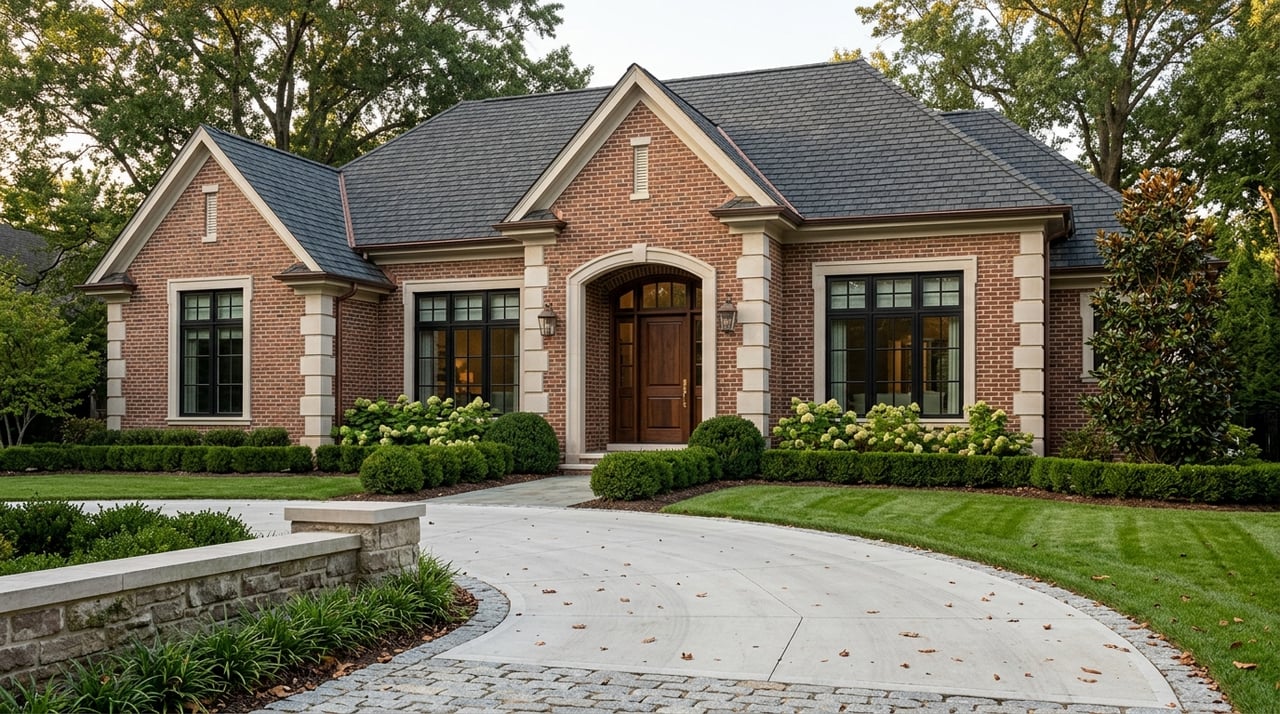
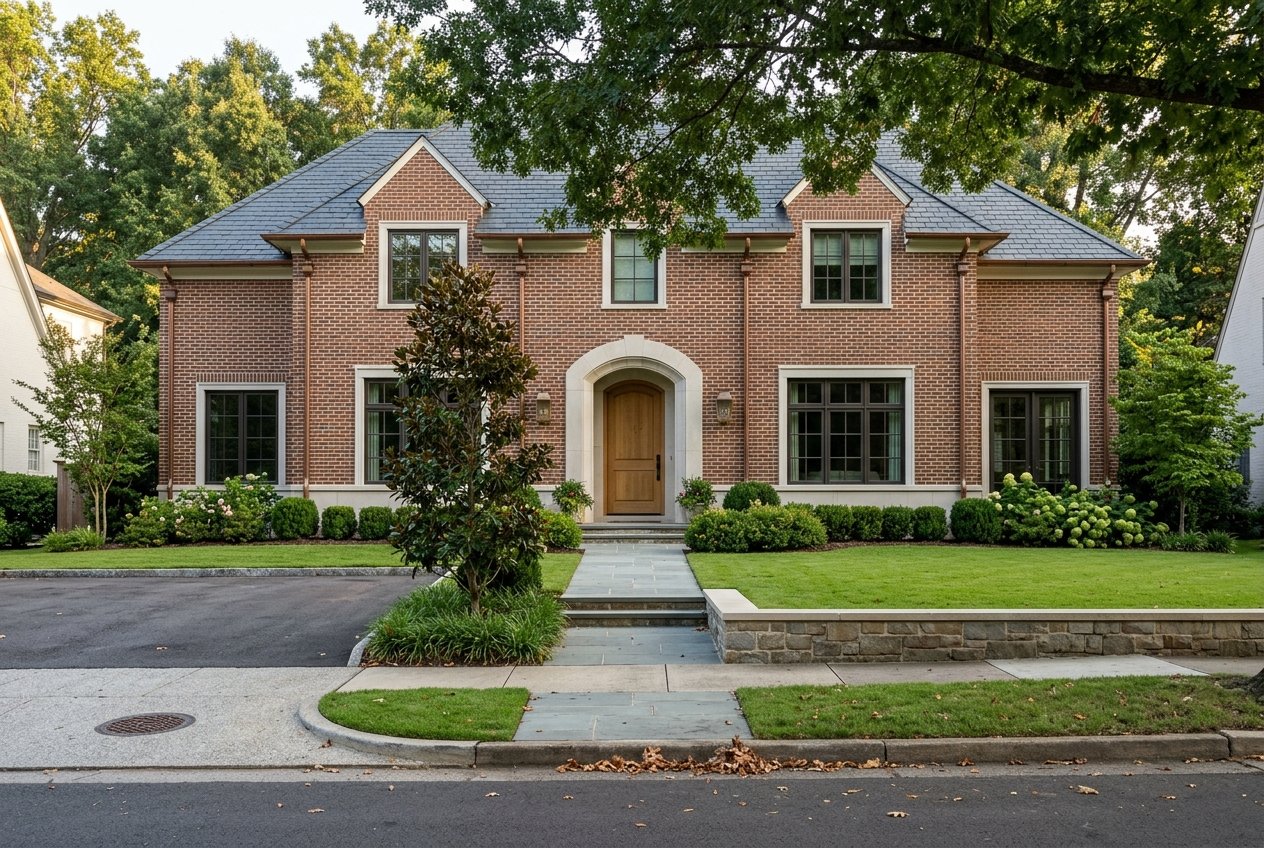
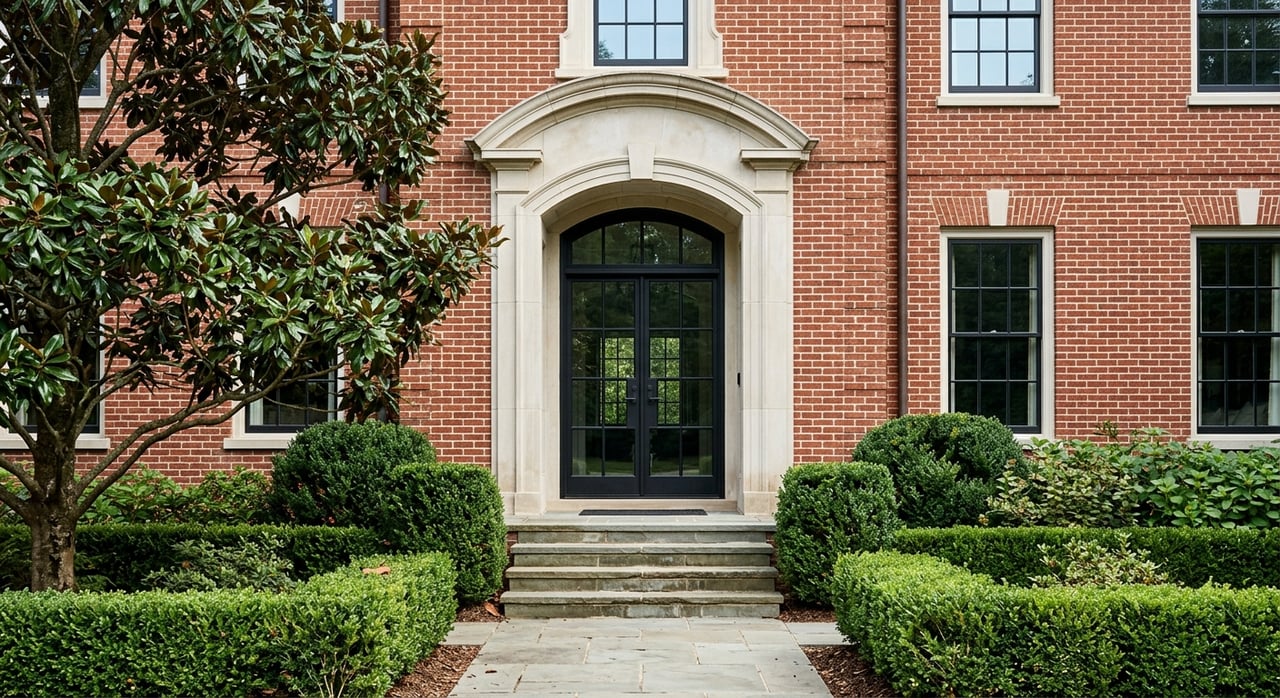
Georgian and Colonial Revival homes are among the neighborhood’s signature looks. These houses typically emphasize symmetry, with centered entrances, balanced window placement, and a strong central hall plan. Classical details like pediments, Palladian windows, and pronounced cornices reinforce the formal appearance.
From the street, these homes often feel composed and orderly. Broad lawns, straight entry walks, and a clear axis from driveway to front door support that formal language. In Tuxedo Park, that sense of control works especially well on deep lots where the home can sit back and command a long approach.
Inside, these homes usually follow a more formal circulation pattern. The central hall often serves as the organizing feature, and the floorplan tends to reflect the symmetry you see outside.
Tudor and Cotswold
Tudor and Cotswold homes offer a more picturesque counterpoint. Instead of symmetry, they lean into asymmetry, steep cross-gables, half-timbering, multi-paned casement windows, and decorative chimneys. The roofline becomes one of the most important visual elements.
These homes often feel sculptural from the road. Their massing creates a layered, storybook quality that fits the wooded terrain and curving roads of Tuxedo Park. The setting softens the scale and gives these estates a country-retreat feel.
Inside, period-revival homes like these often include larger and fewer rooms than the earlier houses they reference. That can make them feel more open than buyers expect, even when the exterior reads as highly detailed and intimate.
European-Inspired Villas
Another important group in Tuxedo Park includes European-inspired villas. These may draw from Mediterranean Revival, Italian Renaissance, Italianate, or later French vernacular traditions. While each has its own details, they share a villa-like presence rather than a boxy one.
Mediterranean-inspired homes often feature stucco exteriors and low or flat roofs. Italianate examples may include low overhanging roofs, decorative brackets, towers, or projecting porches that give the home a more vertical and asymmetrical appearance. French-influenced homes add another layer to the neighborhood’s postwar architectural mix.
In Tuxedo Park, these houses often feel designed to sit within the landscape rather than dominate it. The scale may be grand, but the effect is usually softened by trees, setbacks, and carefully composed approaches.
Modern and Postwar Homes
Tuxedo Park also includes a later layer of modern and postwar houses. The local historic survey identifies International, Neoclassical Revival, Frank Lloyd Wright-inspired, and Rustic homes among this group. Together, they add another chapter to the district’s architectural story.
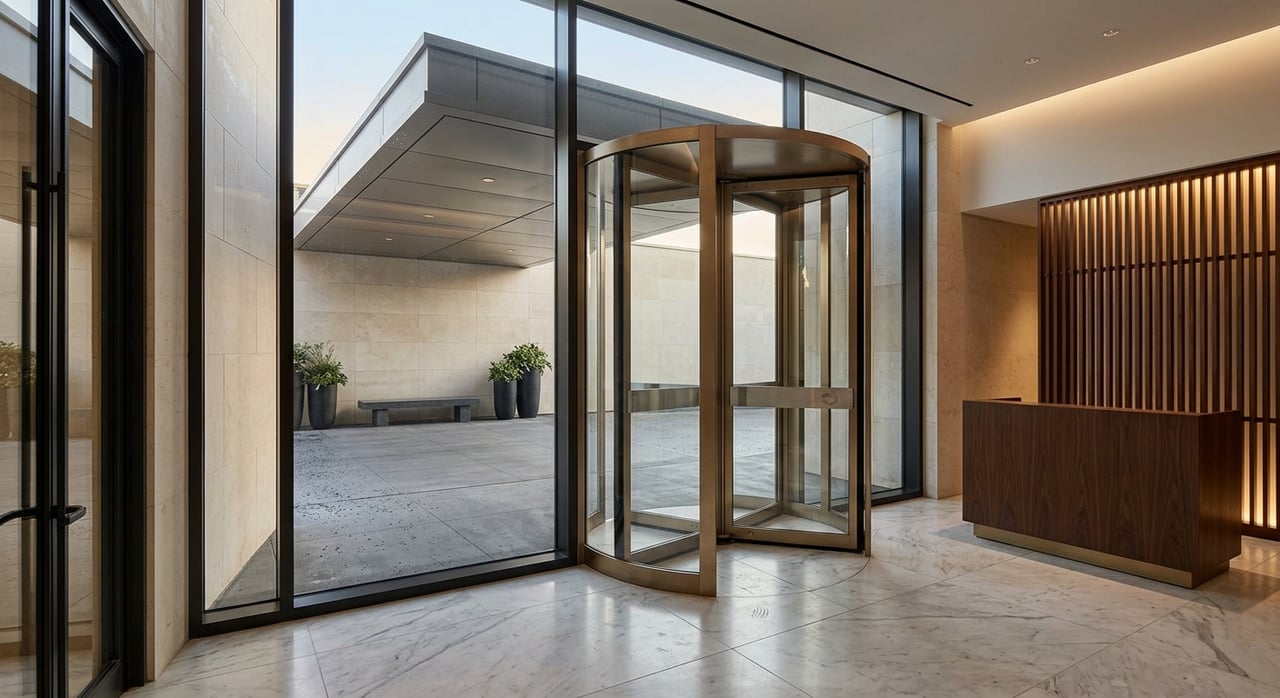
Modern houses generally shift the focus away from ornament and toward siting, light, and openness. Long, low forms, broad expanses of glass, and a stronger visual relationship to the landscape are common traits. In a setting like Tuxedo Park, that often creates a quieter form of luxury.
These homes can feel especially flexible inside because open plans and indoor-outdoor connections are often part of the original design idea. Even so, their success still depends heavily on how the structure meets the lot and the surrounding trees.
Quick Cues for a Drive-Through
If you want to identify styles quickly while moving through Tuxedo Park, a few visual cues can help.
What to Look For
- Georgian / Colonial Revival: centered entrances, even window rhythms, formal porches, and a balanced facade
- Tudor / Cotswold: steep crossed gables, half-timbering, tall narrow windows, and standout chimneys
- European-inspired villas: stucco walls, villa-like massing, and low or flat rooflines
- Modern / postwar: long low profiles, generous glass, and strong indoor-outdoor connection
These cues are useful, but they are only part of the picture. In Tuxedo Park, the lot size, setback, and driveway composition often tell you as much as the facade itself.
How Architecture Shapes Daily Living
One of the most useful ways to understand a home style is to think about how it affects everyday use. In Tuxedo Park, style is not just a visual decision. It often shapes circulation, privacy, outdoor living, and the overall feel of the property.
Formal Homes and Axial Layouts
Georgian and Colonial Revival estates usually support a more formal way of moving through the home. The central hall creates a clear organizational spine, and the exterior often mirrors that structure with a strong front-facing axis.
For buyers, that can translate into a sense of ceremony and definition. Rooms may feel more clearly assigned, and the outdoor spaces often reinforce a polished front-to-back composition.
Picturesque Homes and Layered Spaces
Tudor and Cotswold homes often feel more enclosed and layered from the outside. Their asymmetry and sculptural roofs create a different kind of arrival experience, especially on winding drives and wooded lots.
That exterior character does not always mean a closed interior. Many period-revival homes were designed with larger and fewer rooms, which can create a comfortable blend of historic character and livable scale.
Villas and Landscape-Centered Living
European-inspired villas often create a strong relationship with terraces, lawns, and transitional outdoor spaces. Their forms tend to feel relaxed and estate-like rather than rigid.
That can appeal to buyers who want a home that feels composed but not severe. In Tuxedo Park, this style often pairs naturally with broad grounds and mature landscaping.
Modern Homes and Openness
Modern and postwar homes tend to prioritize light, openness, and connection to the outdoors. Large windows and open plans often make the surrounding landscape part of the interior experience.
For some buyers, that creates the most adaptable living environment. The architecture can feel visually lighter, even on substantial estate lots.
Why Site Planning Matters So Much
In many neighborhoods, buyers focus first on square footage or facade style. In Tuxedo Park, site planning deserves equal attention. The neighborhood’s identity is closely tied to deep lots, thoughtful placement of residences, and the house-to-street relationship.
That is one reason the district feels so unified despite its range of styles. A Georgian estate, a Tudor manor, and a modern house can all belong here because the landscape framework ties them together.
The City of Atlanta adopted SPI-25 to preserve the neighborhood’s deep lots and thoughtful placement of homes. For anyone evaluating a property here, that context matters because the setting is a major part of long-term value and visual integrity.
Thinking About Updates and Renovation
If you are considering buying in Tuxedo Park, renovation potential is often part of the conversation. The first thing to know is that the neighborhood’s exterior identity is tied as much to site planning as to architectural style.
Georgia’s National Register guidance states that listing does not itself restrict the use, treatment, transfer, or disposition of private property. At the same time, the neighborhood’s preservation framework places clear importance on deep setbacks, lot patterns, and the placement of homes on the land.
In practical terms, changes to massing, rooflines, setbacks, or the house-to-street relationship may be more sensitive than interior updates. That is a useful lens whether you are evaluating a classic estate or a later modern property.
Period-revival homes may offer room for interior reconfiguration because they were often designed with larger and fewer rooms than the earlier houses they emulate. Modern homes may already have open plans, which can make updates more about finishes, systems, and preserving the original spatial idea.
What Makes Tuxedo Park Special
The lasting appeal of Tuxedo Park comes from its layered history. You are not looking at a neighborhood built in one burst with one architectural formula. You are seeing classical Georgian order, picturesque Tudor massing, European villa references, and later modern design all set within one established estate landscape.
That combination gives the area unusual depth. It feels less like a single subdivision and more like an architectural archive shaped by time, land, and thoughtful planning.
If you are buying or selling in Tuxedo Park, understanding those differences can help you make better decisions about positioning, value, and long-term fit. For discreet guidance on Buckhead’s estate neighborhoods, connect with Troy Stowe.
FAQs
What architectural styles are most common in Tuxedo Park?
- Tuxedo Park is known for Georgian and Colonial Revival homes, Tudor and Cotswold houses, European-inspired villas, and later modern or postwar designs.
What defines the look of a Georgian or Colonial Revival home in Tuxedo Park?
- These homes usually feature symmetry, centered entrances, balanced windows, classical details, and a formal central hall layout.
How can you identify a Tudor or Cotswold home in Tuxedo Park?
- Look for steep cross-gables, half-timbering, multi-paned windows, decorative chimneys, and an asymmetrical, picturesque form.
Why do Tuxedo Park homes sit so far back from the street?
- Deep setbacks and large lots are part of the neighborhood’s original estate planning and remain central to its visual identity and character.
Are modern homes part of Tuxedo Park’s historic architectural mix?
- Yes. The neighborhood includes later International, Frank Lloyd Wright-inspired, Neoclassical Revival, and Rustic houses that add to its layered architectural history.
Does National Register listing automatically restrict private property changes in Tuxedo Park?
- No. Georgia’s guidance states that National Register listing does not by itself restrict the use, treatment, transfer, or disposition of private property.