If you want luxury living in Midtown, the real question is not whether attached housing works here. It does. The better question is which version of Midtown living fits the way you move through your day. Whether you value lock-and-leave ease or a little more privacy and control, understanding the difference between a luxury condo and a townhome can help you buy with more confidence. Let’s dive in.
Midtown Living Starts With Location
Midtown is built for people who want an urban lifestyle. Midtown Alliance describes the district as compact, walkable, and transit-rich, with more than 40 linear miles of sidewalks and four MARTA rail stations. The area also includes major arts and cultural destinations, access to Piedmont Park, and close proximity to the BeltLine.
That setting matters because it shapes what attached living feels like day to day. In Midtown, your home is often part of a bigger live-work-play pattern that includes walking, dining out, commuting by rail, and enjoying nearby public spaces. For many buyers, that makes condos and townhomes especially relevant options.
Condo Versus Townhome Basics
A condo and a townhome can look similar from the street, but the ownership structure can be very different. Under Georgia’s Condominium Act, a condo owner owns an individual unit plus an undivided interest in the common elements. Under Georgia’s Property Owners’ Association Act, a townhome may instead sit on its own separate lot, with the owner holding title to that parcel.
The practical takeaway is simple: townhome is an architectural style, not always a legal structure. In Midtown, one attached home may be fee simple with an HOA, while another may be governed as a condominium. The recorded declaration controls what you own, what is shared, and how maintenance and expenses are divided.
Midtown Inventory Tells an Important Story
If you are comparing options in Midtown, supply alone shows a clear difference between these two categories. In a current Midtown market snapshot, there were 321 condos for sale with a median listing price of $350,000, compared with just 4 townhouses for sale with a median listing price of $690,000. The same snapshot showed typical market time of 70 days for condos and 35 days for townhouses.
This is only a live snapshot, not a long-term average, but it still says a lot. Condos are the deeper market in Midtown, while townhomes are relatively scarce. That can affect everything from your initial search experience to pricing leverage and resale positioning later.
Why Luxury Condos Appeal in Midtown
For many buyers, a Midtown luxury condo is about convenience first. Current listings often highlight shared amenities such as pools, covered parking, balconies, and service-oriented building features. In a district designed around walkability and urban access, that kind of setup can feel efficient and polished.
A condo can be a strong fit if you want:
- A lock-and-leave lifestyle
- Building amenities in one place
- Less day-to-day exterior upkeep
- Easy access to Midtown’s sidewalks, rail stations, parks, and cultural venues
This option often appeals to professionals, part-time city residents, and buyers who want a more streamlined ownership experience. If your priority is maximizing the Midtown lifestyle outside your front door, a condo may align naturally with that goal.
Why Luxury Townhomes Stand Out
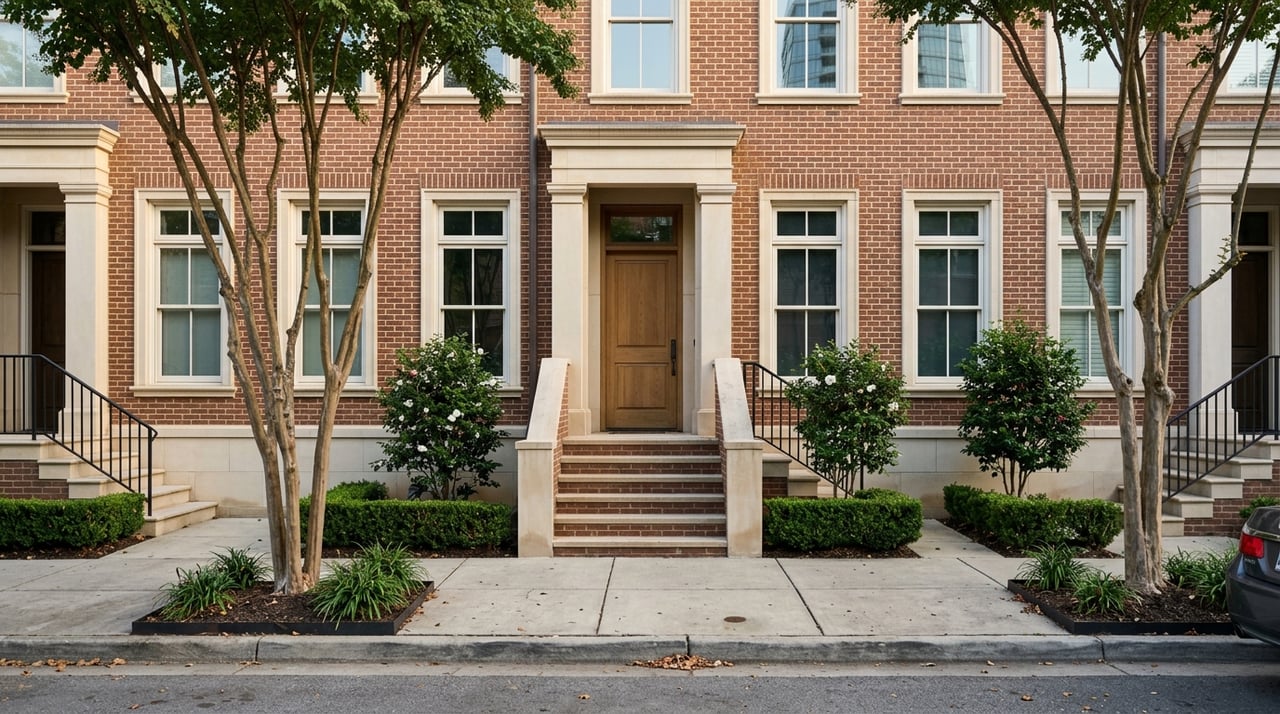
Townhomes in Midtown tend to offer a different kind of appeal. Current listings more often feature private entry, attached garage space, balconies, and in some cases private outdoor areas like landscaped backyards. That creates a more residential feel without leaving the urban core.
A townhome can be a strong fit if you want:
- More privacy than a typical condo building
- Direct entry and fewer shared spaces
- Garage access that feels more self-contained
- A stronger sense of control over your home environment
For some buyers, that balance is the sweet spot. You stay close to Midtown’s energy while gaining more separation and a little more breathing room.
HOA Costs Matter More Than Many Buyers Expect
When you compare a Midtown luxury condo and a townhome, HOA structure deserves close attention. Georgia law allows both condo associations and property owners’ associations to assess common expenses, and unpaid assessments can become a lien with foreclosure rights. That makes HOA review a financial issue, not just a lifestyle detail.
In Midtown, dues can vary widely in practice. One current fee-simple townhome listing advertises a $125 HOA with two garage spots, while a current condo listing advertises a $330 HOA with parking and pool amenities. That does not mean condos are always higher or townhomes are always lower, but it does show how amenities and shared maintenance can affect monthly cost.
As you compare options, review:
- What the HOA covers
- Whether parking is deeded, assigned, or attached
- Which elements are owner-maintained versus association-maintained
- The overall assessment structure
Those details can shape monthly carrying costs, future budgeting, and resale appeal.
Parking Can Change the Decision
In a place like Midtown, parking is not a minor detail. The district is intentionally car-lite and transit-rich, which is part of its appeal, but buyers still place real value on a practical parking setup. Covered spaces, attached garages, and clearly assigned parking can make daily life much easier.
This is one area where condos and townhomes often diverge. Condo buildings may offer covered or deeded parking tied to the unit, while townhomes may offer direct garage access that feels more private and convenient. In either case, parking can influence not only your routine, but also how future buyers view the property.
Resale Is About the Specific Property
Many buyers ask whether condos or townhomes appreciate better. In Midtown, the better question is more specific: how well does the property match the likely buyer pool? Building quality, HOA health, parking, maintenance burden, and exact location often matter more than the label alone.
There are a few useful signals in the data. Midtown’s condo market is much deeper, which may create more direct competition when you sell. Townhomes are scarcer and higher priced, which can support demand, but that same scarcity may also narrow the pool of buyers able or willing to purchase one.
There is also a broader backdrop to consider. Nationally, Redfin reported in July 2025 that condo prices fell 2.2% year over year in May, with rising HOA fees and insurance costs contributing to pressure on the segment. That is not a Midtown forecast, but it is a reminder to evaluate the building and cost structure carefully.
Midtown’s Demand Story Still Matters
Even with those tradeoffs, Midtown continues to show durable long-term demand drivers. Midtown Alliance says the district has attracted more than $5 billion in new investment since 2000, supports about 20,000 residents and more than 70,000 daily workers, and draws millions of arts and cultural visitors each year. Atlanta’s transportation planning also points growth toward already dense areas such as Midtown.
That larger context supports the case for buying well in Midtown. If you choose the right property for your goals, you are buying into an established urban district with strong everyday relevance. The key is matching the property type to your lifestyle and your exit strategy.
Midtown Versus Buckhead Feel
For luxury buyers familiar with Buckhead, Midtown can feel meaningfully different. Midtown is a compact urban core centered on walkability, transit, parks, arts, and mixed-use density. Buckhead, by contrast, includes more than 40 neighborhoods and blends high-rise living with traditional neighborhood settings, two MARTA stations, and strong access to GA-400, I-75, and I-85.
That difference helps clarify the condo-versus-townhome decision in Midtown. Here, condos often appeal to buyers who want maximum convenience and amenity density in a walkable setting. Townhomes often appeal to buyers who want more space, private entry, and a stronger sense of ownership while staying in the city.
How to Choose the Right Fit
If you are deciding between a luxury condo and a townhome in Midtown, focus on how you actually live. A condo may be the better move if you travel often, want amenities, and prefer a more managed environment. A townhome may be the better move if you want private entry, garage access, and a more self-contained feel.
Ask yourself:
- How important are building amenities?
- How much privacy do you want?
- Do you prefer shared maintenance or more ownership responsibility?
- What kind of parking setup fits your routine?
- How long do you expect to own the property?
When the answers are clear, the decision usually gets easier.
Whether you are buying your first Midtown pied-à-terre or repositioning within Atlanta’s luxury market, the strongest choice is the one that aligns with your daily life, your budget structure, and your long-term plans. If you want discreet, informed guidance on Midtown attached living, connect with Troy Stowe for a tailored strategy.
FAQs
What is the main difference between a Midtown condo and a Midtown townhome?
- A Midtown condo usually means you own an individual unit plus a shared interest in common elements, while a townhome may be a separately owned lot with HOA governance. The recorded legal documents determine the exact structure.
Are Midtown condos more common than Midtown townhomes?
- Yes. A current Midtown market snapshot showed 321 condos for sale versus 4 townhouses for sale, which suggests condos make up a much larger share of available attached housing in Midtown.
Do Midtown townhomes usually cost more than Midtown condos?
- In the current snapshot, yes. The median listing price shown was $690,000 for townhouses versus $350,000 for condos, though live market snapshots can change over time.
Are HOA fees higher for Midtown condos than for Midtown townhomes?
- They can be, especially when condo buildings include more shared amenities and maintenance, but the governing declaration controls the actual allocation of costs and responsibilities.
Which Midtown option is better for privacy: condo or townhome?
- In many cases, a townhome offers more privacy because listings often feature private entry, garage access, and fewer shared spaces than a typical condo building.
Is parking important when buying a home in Midtown Atlanta?
- Yes. Midtown’s walkable, transit-rich layout reduces car dependence for some residents, but deeded, covered, or attached parking can still make a meaningful difference in convenience and resale appeal.